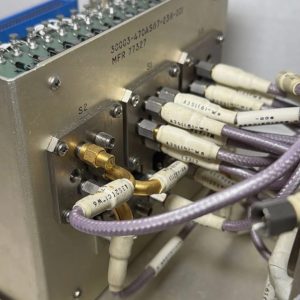
The Aviation Switching Module – NSN 4920-01-250-2696 (AS-IS / Untested) provides aviation maintenance organizations, military-surplus buyers, aerospace technicians, equipment restorers, and collectors with access to a catalog-identified switching component whose operational status has not been confirmed.
The Aircraft Switching Module can form part of a specialized aviation system, while the Aerospace Switching Module requires identification through labels, technical documentation, connector configuration, and application records.
An Aircraft Electrical Switching Module, Aviation Electrical Control Module, Aircraft Power Switching Module, Aerospace Electrical Control Unit, and Aircraft Signal Switching Module may describe related switching or control functions, but the exact purpose of this NSN should be verified before use.
Accurate use of Aviation Control Module, Aircraft Electronic Switching System, Aerospace Switching Unit, and Aircraft Electrical Module terminology improves SEO without creating unsupported functional claims.
Overview of the Aviation Switching Module
A matching NSN can improve identification, but it does not establish present condition, functional status, completeness, or suitability for a particular aircraft or test system.
An identification plate should not be removed, repainted, altered, or covered because it may provide the strongest evidence of the component’s origin.
Evaluating Surplus Aircraft Electronics
The buyer should plan for professional inspection, troubleshooting, repair, parts replacement, or display-only use.
Bench testing should begin only after technical documentation, circuit protection, connector identification, and safe power requirements are established.
Aviation Switching Hardware Uses
The actual role depends on internal circuitry, switch configuration, connector pinout, associated system design, and technical documentation.
Switch movement can be checked gently for obvious binding or damage, but mechanical movement does not establish electrical operation.
Maintaining a Switching Module Assembly
An Aerospace Switching Module may use a durable enclosure, secure connectors, internal wiring, switches, relays, terminal assemblies, circuit boards, or other configuration-specific components.
Proper connector protection preserves the Aerospace Switching Module for future testing or restoration.
Aircraft Electrical Hardware Review
External condition cannot confirm the state of hidden relays, contacts, circuit boards, wiring, or internal components.
Seals, labels, inspection marks, tamper indicators, and original component arrangements may have historical or technical value.
Choosing an Aviation Electrical Control Module
An Aviation Electrical Control Module can coordinate or select electrical functions within a compatible aviation or support-equipment system, depending on its documented design.
High-resolution photographs can preserve readable details before cleaning or restoration.
Choosing an Aircraft Power Switching Module
Controlled bench evaluation should be completed by personnel familiar with aerospace electrical hardware.
Missing covers or barriers may expose conductive points and increase handling risk.
Aerospace Module Troubleshooting
Troubleshooting requires a logical sequence based on technical information rather than random power application.
Every repair should be photographed and recorded if the module is restored.
Maintaining Aircraft Interface Hardware
An incorrect connection may damage sensitive electronics even when the module itself receives little power.
The module should not be modified with unshielded wiring or improvised connectors solely for convenience.
Control Module Compatibility Review
An Aviation Control Module should be treated as one component within a larger system rather than a standalone universal controller.
A matching NSN or housing does not always confirm identical internal configuration when modifications or supersessions exist.
Aircraft Test and Support Equipment
Detailed condition reporting supports fair commercial evaluation.
Responsible educational use can extend the value of the Aircraft Switching Unit.
Aircraft Electrical Distribution Hardware
An Aerospace Power Distribution Module generally manages or routes electrical power among compatible circuits, although the exact function of this NSN should not be assumed without supporting information.
The original installation orientation should be researched where possible.
Choosing an Aircraft Electrical Control Unit
Documented condition improves confidence among buyers of legacy Aircraft Electrical Control Unit equipment.
Testing results should identify exactly which switches, contacts, indicators, or circuits were evaluated.
Choosing an Aviation Power Control Module
An Aviation Power Control Module can have specialized applications within aircraft systems, aerospace ground equipment, maintenance platforms, or test installations.
The equipment should remain disconnected and protected during storage.
Electronic Switching Module Applications
A single module removed from the system may not be testable through ordinary standalone methods.
The module should not be blamed until related wiring and equipment are considered where the original system is available.
Shipping Aviation Electrical Modules
The Aerospace Aerospace Switching Module Switching Unit should be stored in a clean, dry, stable environment protected from moisture, dust, chemicals, impact, pests, and extreme temperature changes.
Insured and trackable transportation supports responsible sales of specialized aviation hardware.
Buying AS-IS Aviation Electronics
The potential cost of connectors, manuals, test equipment, repairs, components, and specialist labor should be included in the buying decision.
The seller should explain whether the unit has been powered, opened, repaired, modified, tested, or removed from known equipment.
Inspecting the Aviation Switching Module Before Purchase
A pre-purchase review should confirm the NSN, manufacturer, part number, serial number, markings, enclosure condition, connectors, switches, included accessories, storage history, modification status, and known application.
- Verify the module identity through its NSN, data plate, physical configuration, connector arrangement, and available technical references.
- Do not interpret clean appearance, smooth switch movement, or intact labels as proof of electrical operation.
- Retain purchase records, photographs, labels, research, testing notes, and repair documentation with the module.
Safe Testing of an Aircraft Switching Unit
Testing should begin with identification research, visual inspection, connector mapping, safety review, and examination of available technical documentation.
Initial evaluation may include mechanical switch checks, continuity testing, insulation inspection, resistance measurements, and examination for shorts or damaged components.
Restoring the Aerospace Switching Module
Restoration should begin with condition documentation, careful cleaning, technical research, component identification, fault isolation, and repair planning.
Accurate records support future maintenance and responsible resale.
Buying NSN 4920-01-250-2696
When responsibly inspected, stored, tested, repaired, and documented, the Aviation Switching Module – NSN 4920-01-250-2696 (AS-IS / Untested) can remain a valuable aerospace electrical component.
Careful technical and commercial evaluation can reduce equipment damage, incompatible purchases, missing-accessory costs, testing hazards, and restoration delays.
Whether the item is purchased for restoration, training, parts recovery, display, testing, inventory, or professional repair, transparent information and controlled handling provide the strongest foundation.
With prompt attention to switches, connectors, wiring, enclosure condition, corrosion, labels, and internal components, the module can preserve its technical and commercial potential.